A 16th Street Heights DC Weekend of Reopenings
August 20, 2026
August 20, 2026
If you have lived in 16th Street Heights for more than a few years, you have probably walked or driven past the locked gates on Colorado Avenue NW without giving them much thought. The amphitheater behind them, the one carved into Rock Creek Park just off 16th Street, has been dark since 2016. Not renovated, not repurposed, just closed. A venue built to hold more than 4,000 people has been sitting quietly a few blocks from your front door while you assumed there was nothing left to see.
This week that assumption gets tested. On August 20, 21, and 22, Carter Barron Amphitheater reopens for three nights of live music for the first time in a decade, and the story of how that happened says more about this neighborhood than any list of parks and restaurants ever could.
Carter Barron was built in 1950 to mark Washington's 150th anniversary as the nation's capital, and it opened as one of the first racially integrated outdoor performance venues in the country. Over the decades that followed, it hosted Ella Fitzgerald, Duke Ellington, Bruce Springsteen, and Shakespeare under the stars. Then, in 2016, deferred maintenance and funding gaps caught up with the building. The stage was declared unsafe. The gates closed. For a neighborhood that borders the park on its western edge, that closure meant losing a piece of the summer calendar that had defined it for generations.
Rock Creek Conservancy, working with the National Park Service through a program called the Carter Barron Alliance, spent years trying to change that. This weekend's reopening is not the full comeback. The original stage still cannot safely hold performers, so organizers built a temporary stage over the first few rows of seating, and they are capping attendance at around 400 people rather than the venue's full capacity. Tickets are $15 per night, general admission, and the lineup leans into the amphitheater's jazz roots: the JazzDC AllStars, singer Sylver Logan Sharp, the band Black Alley, and Chester Burke Jr. and Company.
NBC Washington quoted Rock Creek Conservancy's executive director describing what the closed gates have meant to people who live nearby:
"there's palpable excitement about this place"
That excitement is not really about three concerts. It is about a piece of neighborhood infrastructure that residents assumed was gone for good turning out to be dormant instead.
If you want to go, the amphitheater sits at 4850 Colorado Ave NW, with parking off both 16th Street and Colorado Avenue and a Capital Bikeshare station at 14th and Kennedy. The D60, D6X, D50, and D5X buses all stop nearby. Attendees can bring their own food and non-alcoholic drinks, but coolers, glass containers, and pets are not allowed inside, and the shows go on rain or shine.
A few blocks away, a smaller version of the same story has already played out. At 14th and Buchanan, a corner store called Gedera Market burned down in July 2022 after fireworks ignited a fire that displaced residents living above it. For close to three years, that lot sat empty while neighbors speculated about what might replace it.
The answer turned out to be Casa Mia Italian Eatery and Café, which opened at 4600 14th Street NW after a liquor license filing in early 2025 described a modest 23-seat restaurant with an 8-seat sidewalk café. It serves focaccia pizza, salads, coffee, wine, and gelato made in house, and it has become the kind of low-key gathering spot that a commercial corridor like this one has not had in a while.
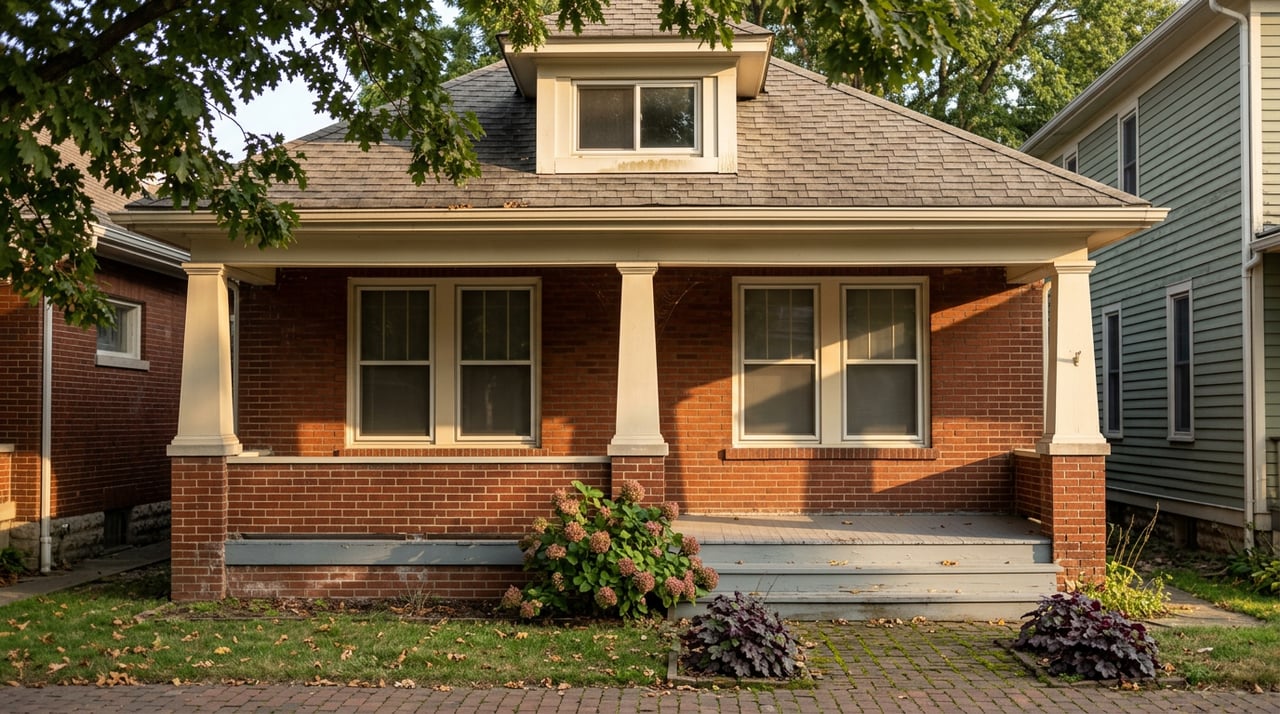
The pattern here matters more than either story on its own. 16th Street Heights has never had much commercial density. Its housing stock runs to Craftsman bungalows, American Foursquares, and rowhouses on quiet side streets, and the neighborhood's few business corridors have always been confined to stretches of 14th Street and Georgia Avenue. That scarcity used to read as a permanent condition, the tradeoff you accepted for tree-lined streets and proximity to the park. What the Carter Barron reopening and the Casa Mia build-out both suggest is something different: the spaces were not gone, they were switched off, waiting for someone to put in the work and the money to bring them back.
Here is what is confirmed for the Carter Barron shows, so you can plan around it if you want to go:
It would be easy to treat this as two unconnected pieces of neighborhood news, a concert series and a new restaurant. But both stories share the same shape. A piece of the neighborhood's built environment sat unused for years, not because nobody wanted it, but because reactivating it required patient, coordinated work that took time to materialize. Rock Creek Conservancy spent years building the Carter Barron Alliance before three nights of music became possible. The Gedera lot sat through a full news cycle of speculation before Casa Mia's owners actually opened the doors.
For anyone who has lived here through the quiet years, that is worth sitting with. The old read on 16th Street Heights, the one you will still find in outdated write-ups calling it a sleepy commercial corridor with slim pickings, was accurate for a long stretch. It is getting less accurate by the month, not because the neighborhood suddenly attracted new demand out of nowhere, but because the people and institutions already invested here kept showing up to do the unglamorous work of bringing dormant spaces back online.
If you live within walking distance, here is a simple way to spend the next few days taking that in rather than just reading about it:
None of this changes what 16th Street Heights fundamentally is. It is still a quiet, mostly residential pocket of Northwest DC without a Metro stop inside its boundaries, still a place where the loudest thing on most blocks is wind moving through mature trees. What changes is the sense that quiet and inactive are the same thing. They are not. This week proves it twice over, once at a 76-year-old amphitheater and once at a corner that spent three years waiting for someone to rebuild it.
If you are watching this kind of change unfold in your own neighborhood and wondering what it might mean for your home's place in the market, or if you know someone weighing a move into or out of this pocket of Northwest DC, Kerri Murphy has spent years tracking exactly these shifts block by block. Let's Connect.
Stay up to date on the latest real estate trends.
Buying or selling a home should feel clear and supported. With local expertise and a client-first approach, every step is handled with care—so you can move forward with confidence.