Colonial Village DC Homes in a Quiet, Parkside Enclave
May 28, 2026
May 28, 2026
Tucked along the northern edge of the District, Colonial Village offers something that can feel surprisingly rare in DC: a quiet, residential setting with direct access to nature and a strong sense of place. If you are looking for a neighborhood that feels removed from the rush without giving up city access, this small enclave deserves a closer look. Here’s what makes Colonial Village stand out, who it tends to suit best, and what you should know if you are considering a move here.
Colonial Village sits in Ward 4 at the northern tip of the District. While DC does not use official neighborhood boundaries, Office of Planning materials commonly place it between 16th Street NW on the east, Holly Street NW on the south, Beach Drive NW on the west, and the DC/Maryland line on the north.
That location shapes much of the neighborhood’s appeal. You are still in DC, but the setting feels more tucked away than many other parts of upper Northwest because of its park edge, low-density layout, and limited internal commercial activity.
One of the clearest things about Colonial Village is that it does not read like a typical DC grid neighborhood. It was developed beginning in 1931 as an automobile-era suburb, so its curving streets and parkways follow the terrain rather than a rigid street pattern.
That design choice still affects how the neighborhood feels today. The street layout, larger lots, and wooded surroundings create a more secluded, residential atmosphere than you might expect inside city limits.
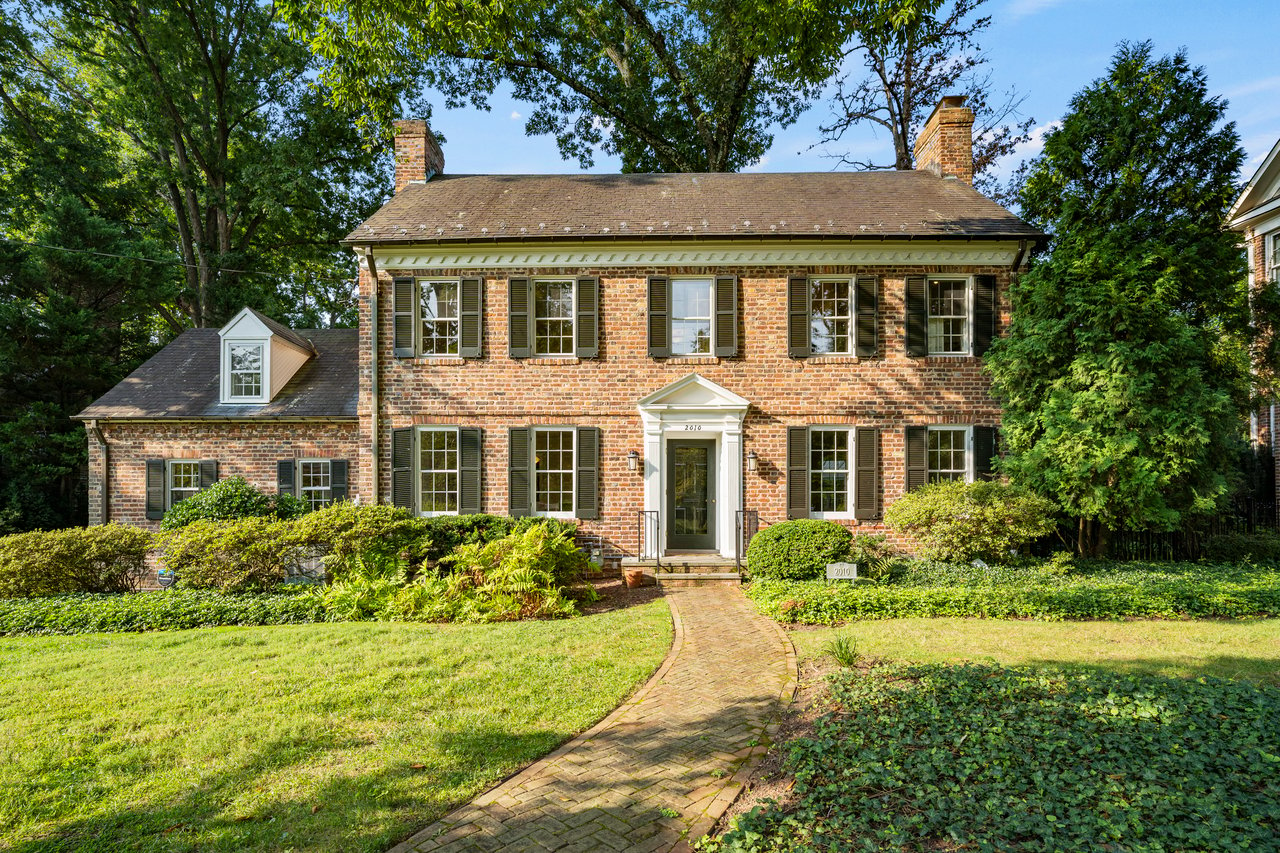
If you are picturing rowhouses or mid-rise apartment buildings, Colonial Village is not that. The neighborhood is best understood as a detached homes with larger lots and a historically layered housing stock.
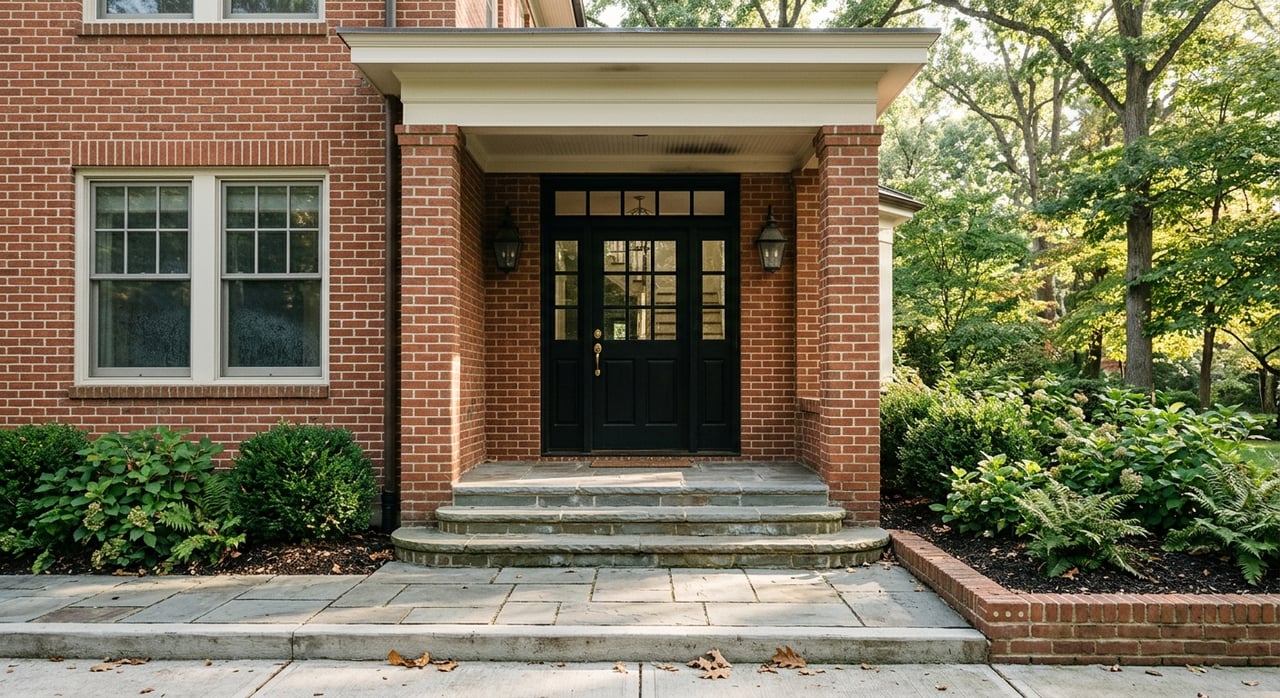
The oldest sections are known for stately brick and stone homes, many with Colonial Revival architecture. Later development added less formal ranch-style homes along the north edge, so the neighborhood has variety without losing its overall residential character.
For buyers, that means your search here is usually about space, setting, and house style rather than walk-up convenience or dense mixed-use living. If you want a tucked-away detached-home neighborhood in DC, Colonial Village fits that description well.
Colonial Village borders Rock Creek Park, and that is one of its biggest draws. Rock Creek Park spans 1,754 acres and includes more than 32 miles of hiking trails and paths, according to the National Park Service.
That kind of access can shape your daily routine in a meaningful way. Instead of needing to plan a special trip for green space, trails, or scenic drives, you have the park right at the neighborhood’s edge.
Beach Drive also plays a different role here than some buyers first assume. The section between Broad Branch Road and the Maryland boundary is closed to vehicular traffic year-round, which makes it more of a recreational and scenic asset than a primary commuting route.
For most residents, 16th Street NW is the key transportation route. WMATA’s D6X 16 St Limited serves Colonial Village between Silver Spring Station and Archives Station, and WMATA says it runs every 12 minutes at minimum. The D60 also provides service between Silver Spring and downtown.
In practical terms, the most realistic commuting patterns are bus-to-Metro, bus-to-downtown, or driving via 16th Street. Silver Spring Station, which is on the Red Line is a major nearby connection point.
One helpful note for planning: Once completed, the Purple line will also stop at the Silver Spring station, giving more public transportation access to Mongomery and Prince George's Counties in Maryland.
If you are deciding between neighborhoods, Colonial Village makes more sense when you compare it to nearby options. The closest matches in feel are Shepherd Park and North Portal Estates, which are also 16th Street neighborhoods with large detached homes and rowhouses near Rock Creek Park and its tributary parks.
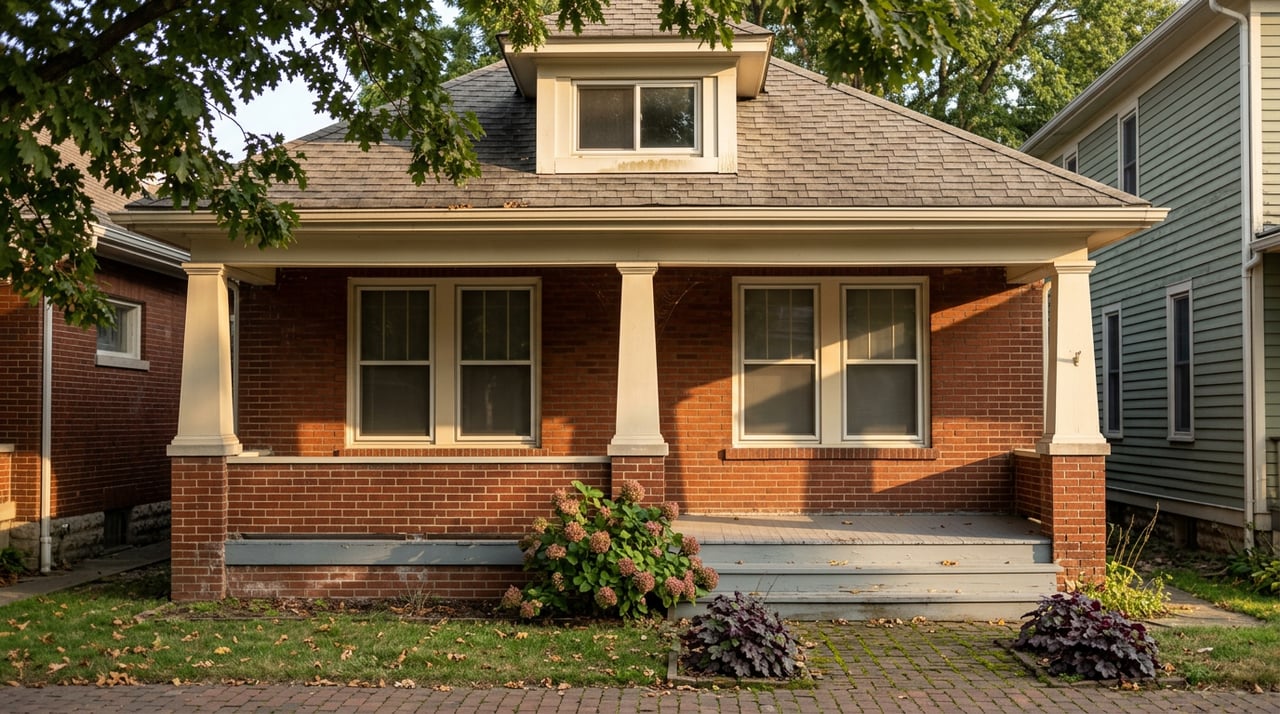
Takoma offers a different experience. Takoma is a late-19th-century streetcar suburb with a commercial center near the DC-Maryland line and an architectural mix that includes Victorian and bungalow-style homes. In simple terms, Takoma tends to feel more village-like and retail-oriented.
Ward 3 neighborhoods such as Woodley Park, Cleveland Park, North Cleveland Park and Forest Hills, and the DC portion of Chevy Chase also differ in a noticeable way. Those areas are more often organized around local commercial centers, with shops, restaurants, denser apartment or rowhouse clusters, and then single-family homes around them.
Colonial Village is more secluded and less centered on a retail core. That is a plus if you want a quieter residential setting, but it may be less ideal if your top priority is stepping out your door to a concentration of shops and restaurants.
Colonial Village tends to appeal to buyers who want a residential, park-adjacent setting without leaving DC. It can be a strong fit if you value having a detached home, upper Northwest access, and a calmer day-to-day feel.
It may also appeal to relocators comparing DC with nearby Maryland options, especially because the neighborhood sits close to the District line and has practical ties to Silver Spring transit. If you are weighing lifestyle, home style, and commute options together, Colonial Village offers a distinct combination.
Like many American neighborhoods developed in the early 20th century, Colonial Village has a history that should be acknowledged honestly. The Ward 4 Heritage Guide notes that early marketing and deed restrictions reflected the racial exclusion common in many developments of that period, and that the community was closed to Black and Jewish residents when development began.
That history is part of understanding the neighborhood in full. If you are researching Colonial Village today, it is worth knowing both what makes the area distinctive and the broader context in which it was created.
If Colonial Village is on your shortlist, focus on the factors that most affect daily life:
These details can help you decide whether Colonial Village aligns with how you actually want to live, not just how a neighborhood looks on a map.
Colonial Village is not one of DC’s loudest or most talked-about neighborhoods, and that is part of its appeal. It offers a distinctive mix of detached homes, historical character, park access, and a quieter setting that feels tucked away while remaining connected to the city.
For the right buyer, that balance can be hard to find. If you want help comparing Colonial Village with nearby DC and close-in Maryland neighborhoods, Kerri Murphy can help you sort through the options with clear, thoughtful guidance.
Stay up to date on the latest real estate trends.
Buying or selling a home should feel clear and supported. With local expertise and a client-first approach, every step is handled with care—so you can move forward with confidence.